

India’s false start to the tour of United Kingdom was down to an adaptation issue, a long-standing chink in the armour of batting units travelling from the subcontinent. Having grown up on dull pitches featuring clay-heavy subsoil, their game is built around frontfoot play. Virat Kohli is a quintessential example. He scored 28,215 international runs without a good square cut or backfoot punch in his arsenal. Shreyas Iyer has only just fixed his rocky relationship with the short ball. Save for Rohit Sharma who has a penchant for the pull, Indians are, in general, at the mercy of the climbing lifter. God bless if there is some assistance at the seamer’s disposal.
So, along expected lines, it took the current batch a while to adjust to the nip and bounce that loamy, grass-rich soils lend to the pitches in England. The problem is that top-flight cricket doesn’t take kindly to slow transitioners. By the time India settled in, Ireland had pocketed an incredible series win. Assistant coach Ryan ten Doeschate doffed his hat to the underdog which will soon be celebrating its ten-year anniversary as a full-member nation, hailing their hard lengths that took India’s driving and lofting proclivity out of the equation. Coming into the England series, an even stiffer challenge, a tactical as well as technical reset was the need of the hour.
Much to the management’s relief, India fared well in Durham. A chunk of their 189 runs came square of the wicket, with Abhishek Sharma and Shivam Dubey not only picking up the lengths quickly but also demonstrating ideal placement. Spinners, the less effective group in this region, were attacked as India fetched 95/1 in the ten overs shared between Liam Dawson, Adil Rashid and Will Jacks. Was there a conscious effort to widen the scoring range against speed merchants and target spin? “I think it has more to do with individuals taking responsibility than an overhaul as such,’’ bowling coach Morne Morkel said.
“Obviously, in Ireland, the conditions were foreign to what these guys had experienced in the last couple of months where the ball was coming on nicely and you could hit through the line. In England, you need to sometimes give yourself a ball or two to understand what the surface is doing. Then it’s all about formulating your game plan, how you can change it up a little bit, and I believe the way we went about our business in the last game points towards progress.’’
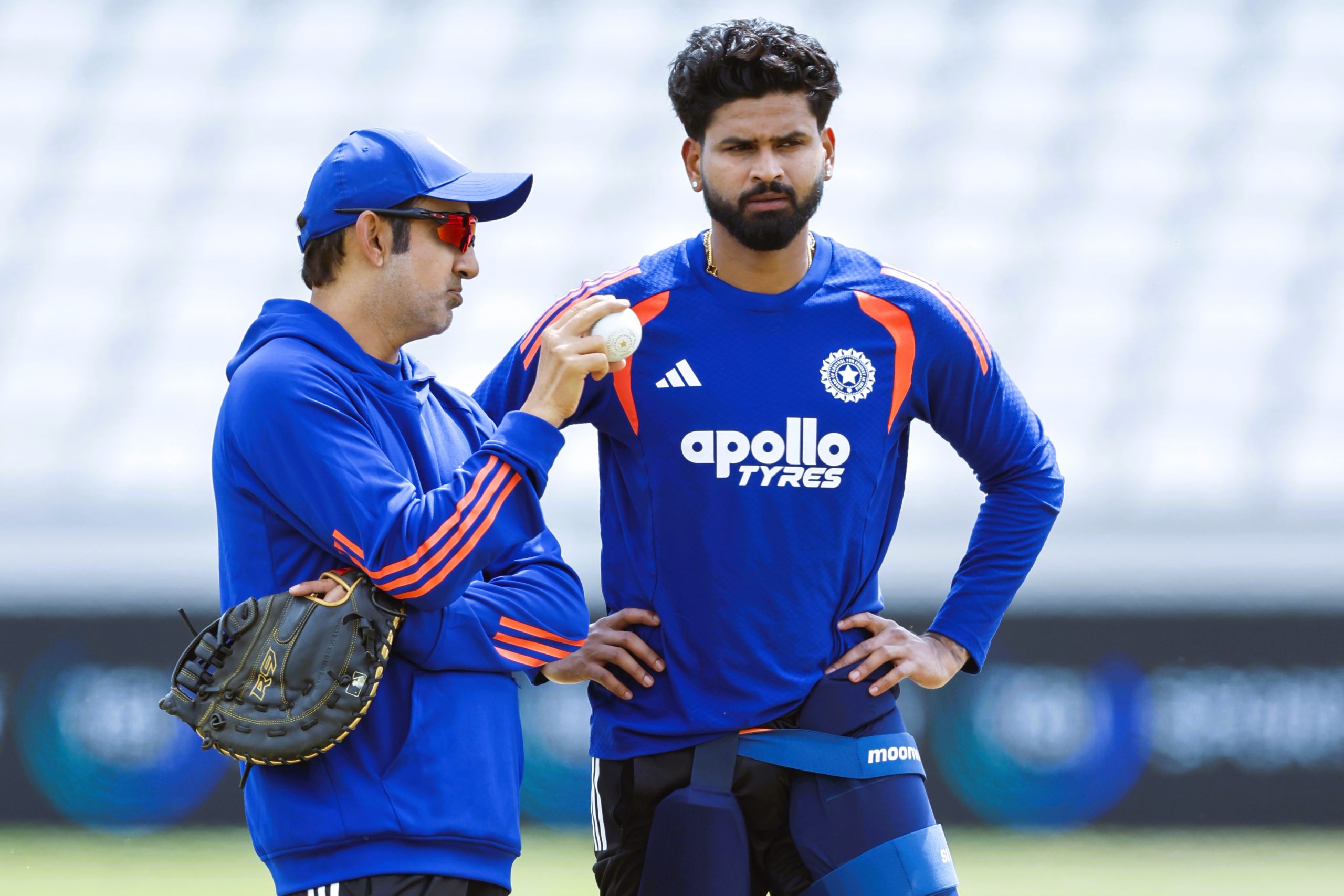
Yet the emphasis on backfoot strokeplay was evident throughout India’s training session on the eve of the second T20I in Old Trafford. Abhishek faced throwdowns by ten Doeschate from 18 yards in a bid to produce an encore of his responses to Saqib Mahmood. Prasidh Krishna and Harshit Rana were in the mood for chin music, roughing up Ishan Kishan and Suryansh Shedge. Vaibhav Sooryavanshi rode the bounce with consummate ease to earn a knowing smile from U19 counterpart Haider Hussain, a leg-spinner from Lancashire. Washington Sundar received tips from Gautam Gambhir and Sitanshu Kotak as it became clear that his exaggerated front press was leading to compromised aggression off the backfoot. Overall, as a batting group India seemed determined to further access the square boundaries while consolidating their ability to handle spin.

In an adjacent net, Tilak Varma was soldiering on despite looking ill at ease against the local spin twins, Haider and Bradley Barrow. An attempt to slog sweep had resulted in broken timber, not the first and last time he’d be troubled by flight and dip in that scratchy session. His strike rate of 126 against tweakers is a bone of contention for India, who’ll be trying to beset the likes of Adil Rashid in the middle phase.
Tilak’s hit was sandwiched between intense discussions with Kotak regarding body movements, the lack thereof causing Sanju Samson’s downfall in Durham. It was his third failure on the trot, but since he also stitched together three blockbuster knocks in March alternate opener Vaibhav may, in all likelihood, remain confined to the bench. “We need to respect the fact that we’ve got the number one batter in T20 cricket in Abhishek (usurped by Ishan recently). Sanju was the player of the World Cup. He had a great IPL, so I think as coaching staff it’s only fair to show faith and back your players,’’ Morkel stated.
“Yes, there’s a young man knocking on the door and it’s exciting, but you don’t want to tinker too much and bat other players out of position. It’s not a straightforward swap. It’s a matter of backing the guy who’s won you World Cups by doing well in tough situations. Also from there, build and see how we can structure our top-middle order as best as possible in these conditions,’’ he added.
It is imperative that Samson clicks from hereon because when the dasher is in full flow, England stand no chance of cobbling an arid spell of the kind that they managed around the halfway mark. One of the architects of that lull, Sam Curran deemed the 190-run target India set in the opening contest ‘very chaseable’. After all, he is a member of a team that butchered 304 versus South Africa, leaving Kagiso Rabada with 70 runs in his quota. With Jofra Archer returning to the fold, their bolstered batting depth will, in turn, free up their firebrands wholly.

“It’s set up for a really good series ahead,’’ Sam Curran exclaimed. “Both the teams have had a little look at each other so hopefully tomorrow we have a nice sunny day and a full game of cricket. India are a quality team, so it’d be cool to put some performances on board, drawing heart from that cracking semi-final at the World Cup which we’d reached by holding our nerve at crucial stages. Even before that, we’d won a series in Sri Lanka where the pitches were rather tricky. So, I’d say we’re pretty set in our roles and combinations. The buzz around the group has been great.’’


