

Seagulls at cricket grounds is not a new sight and the Bay Oval in Mount Maunganui is no different. Stadia offer seagulls an abundance of food, open green space, and conditions that mimic natural coastal or field habitats providing them with wide visibility and safe landing zones. Spectators leave behind massive amounts of discarded food such as chips, hotdogs, and pies which is easily accessible to the birds.
Seagulls have the habit of rapidly tapping or shuffling their feet on the grass to create vibrations. This tricks earthworms into thinking it is raining, causing them to surface for an easy meal. But their most renowned personality trait is that they are voracious, opportunistic and ruthless scavengers well-known for stealing food directly from other feathered species, animals or humans. Those qualities sound extremely negative in a day-to-day life context, but on a sports field, those are exactly the qualities that separate the good from the great.
The hunger to achieve more, grabbing opportunities with both hands and finding a way to win from impossible situations. At the halfway stage the Blackcaps had comfortably sunk their teeth into the fifth ODI, but by awakening the seagull within themselves India managed to nick not only the match but also a series win from right under their noses.
On Friday New Zealand lost the toss, were asked to bat first and put on 333 on the board. Their bowlers then produced a masterclass under the lights to dismiss India for a paltry 89. On Sunday they surprised everyone by choosing to bowl first. The educated guess was that New Zealand would simply repeat the formula that worked like a charm, but captain Mitchell Santner was a bit surprised at finally winning a toss and seemed unsure of what to do.

Having basked in the sunshine for a couple of days, the pitch was primed to slow down with dew expected to play a factor in the second innings. Regardless of the decision Santner made, if anyone told him that at the halfway mark the Blackcaps would be chasing 210 to square the series, he would have gladly shook their hand. Without the likes of Matt Henry and Kyle Jamieson restricting India to 209 was an absolute luxury.
In the late 90’s a multinational corporation that manufactures carbonated flavoured soft drinks came up with a slogan in India called “Yeh Dil Maange More” meaning “this heart desires more”. After watching Henry decimate India’s batting in the previous match, Santner probably echoed the sentiment with regard to his spearhead’s availability after he was released from the ODI team to gear up for the upcoming Test series. It’s a tricky situation. You have an opportunity to square the ODI series, but you also know the importance of the Test series in the WTC era. Wouldn’t bowling 10 overs in a high intensity ODI against a good Indian batting line-up be considered better prep for the first Test than having a net session in Wellington? It’s an interesting call that the selectors and team management have made, and they will be hoping that it pays off during the two Test matches to follow.
The modern treadmill of cricket makes for a punishing exercise, and to make matters worse, the rub of the green hasn’t gone New Zealand’s way as far as injuries are concerned. Even before the tour started, they decided to wrap Will O’Rourke in cotton wool for the Australian Tests commencing next month. Zak Foulkes is currently out of action as he recovers from a right hip flexor issue. Ben Sears is nursing an ankle injury. Henry and Lockie Ferguson picked up injuries in the second T20I in Christchurch. Henry was meant to come back at the start of the ODI series but a freak collision with Devon Conway meant we only saw him in the last game whereas Lockie is still on the treatment table. Blair Tickner, meanwhile, was deemed unfit for selection for a week after being replaced for concussion in the Wellington ODI. All these injuries have meant that the Blackcaps have had to dig deep into their fast-bowling resources.
Two sellouts in a row at Bay Oval 🤩
Stoked to see so many fans at the cricket 🫶 https://t.co/hsOCLtraQo
— BLACKCAPS (@BLACKCAPS) November 15, 2026
As the proverb goes, necessity is the mother of invention. Amid this adversity the Blackcaps might have just discovered a gem in Matthew Fisher, whose Test debut against Zimbabwe came in similar circumstances. He was a part of the 2018 New Zealand Under-19 World Cup team that produced the likes of Rachin Ravindra and Finn Allen. Aged 27, he’s only played 16 first-class matches so far in an injury-ridden career, yet his wickets tally reads an impressive 60 wickets at high pace. On his T20I debut in Bangladesh Fisher clocked 150 kmph. Speed merchants are a rare breed and therefore get immediately noticed, nurtured and fast tracked.
It is widely accepted in the cricketing fraternity that you cannot teach someone how to bowl fast. You either possess the skill or you don’t. Coaches can, of course, help you add some extra yards of pace by smoothing the rough edges. 90+ mph category bowlers are normally natural athletes gifted with a rhythmic run-up, a good jump at the crease, quick arm release, strong shoulders and a great follow-through. Watching Fisher live at the ground is an absolute treat as he displays all those traits. A tearaway pacer in full flow is a sight to behold. The wickets he picked up in his opening spell were not unplayable deliveries but more a result of the tight lines he and Jacob Duffy bowled. When everyone is fit and available Fisher is probably still quite low in the pecking order but his performances against India in both the white-ball series must have certainly pushed him higher up the ladder.
Although Fisher and his fellows were brilliant with the ball India didn’t help themselves with some ordinary shot-selection. Five of the top seven got starts but neither of them could convert it into a substantial innings. Rohit Sharma’s chip to short mid-wicket was tame. Kohli flung his bat at a short and wide delivery without moving his feet. Shreyas Iyer once again fell to a bumper. Axar Patel lived dangerously before doing well to get past that phase only to throw it away with a hack to mid-on. Naman Dhir tried to launch Santner over extra with his team reeling at 160/5 after 33 overs. Ishan Kishan top scored with 46 but ran out of partners and India only made it past the 200-run mark thanks to a handy 26-run partnership between Mohammed Siraj and Arshdeep Singh.

The only way to defend 209 in an ODI is by bowling the opposition out. Very rarely can you restrict a chasing team below that score if they play their full quota of overs. Keeping this in mind and the assistance the quick bowlers were getting from the surface under the lights captain Iyer went all-in on trying to dismiss the Blackcaps inside 40 overs. The first 35 overs were sent down by the four pacers. It was a high-risk strategy that paid off handsomely on the night due to the clinical execution of the quartet. Iyer’s captaincy was interesting to witness, oscillating between all-out attack and stretched-out defense, with breakthroughs bringing out his aggressive side. He rotated bowlers regularly, set in-out fields and tested the patience of the opposition. He dared them to take the chase deep but whenever the pressure mounted the batters opted for high-risk options at their own peril. Apart from Kohli’s error at second slip the groundwork was sharp which kept adding to the pressure.
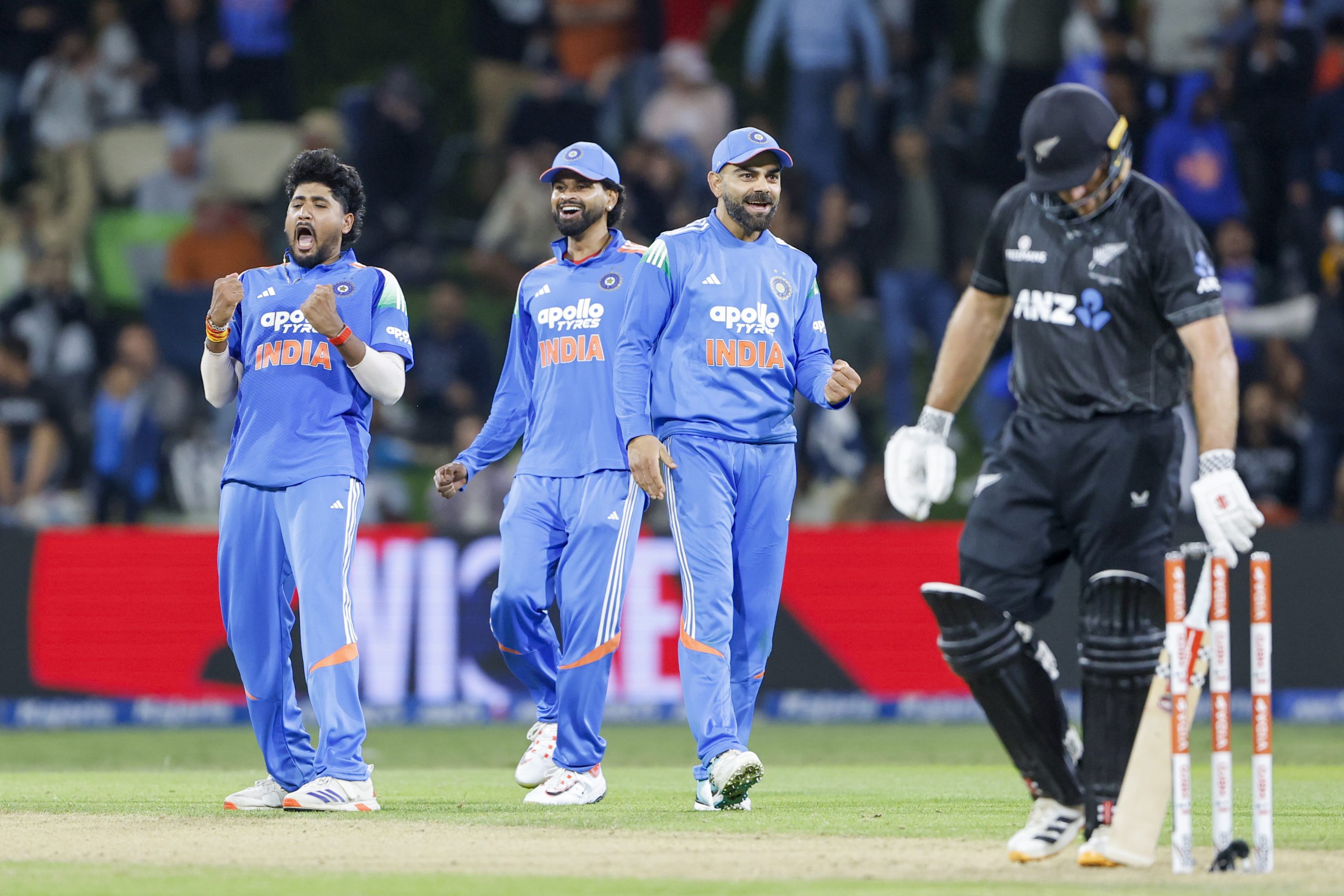
Much like the Indian innings, seven of the top eight Kiwi batters got starts but they too failed to convert those starts into match winning contributions. India ended up winning the match by a margin of 22 runs, an ode to the pivotal contribution of Siraj and Arshdeep with the willow. In a match and series that has been dominated by the bowlers it was no surprise that Arshdeep picked up the player of the match award and Gurnoor Brar the player of the series momento.
New Zealand will be disappointed in losing both the white-ball series on this tour. When there is something at stake, they just seem to lack the knockout punch to finish the job. The Christchurch T20Is, the Wellington ODI and now this game point towards an emerging pattern. It is expected that they will be at their strongest in the longest format of the game and will do all they can to hold onto their current top position on the WTC table. The T20I series was the soup and the ODI series the entrée. Next up is the main course of red-ball action and every cricket tragic loves Test cricket. The crowds for both white ball series majorly comprised Indian supporters but that, much to New Zealand’s delight, may no longer be a case moving forward. It’s an important series for both teams and with fine weather conditions presumed it will be a true spectacle.
White flannels, a mischievous red rock, obdurate blades and the purest format of the game shining under natural light. India’s talisman, you bet, has his eyes on the prize. “In terms of priorities, if you had asked me a month ago which of the three series I would most want to win, it would definitely have been the Test series,” Shubman Gill emphasized.


