

Cricketers often speak about wanting to be a student of the game forever. Is it a hackneyed cliche? For, at some stage of their professional careers, their knowledge bank must reach its saturation point, innit? Or is that aspiration rooted in honesty, an ode to the myriad complex intricacies of a sport themed on chain reactions. Like however much you learn, there’s always another puzzle waiting to be solved. Factor in the rapid evolution of the game in the last two decades, and there seems to be more than a kernel of truth in that philosophy of never-ending absorption.
Elite athletes ought to keep their eyes and ears open, as you never know where the next pearl of wisdom might come from. After all, for the legendary Sachin Tendulkar, the source was a waiter named Guruprasad at the Taj Coromandel in Chennai. He acknowledged the hyper-specific observation, modifying the size of his elbow guard to achieve a smoother bat swing.
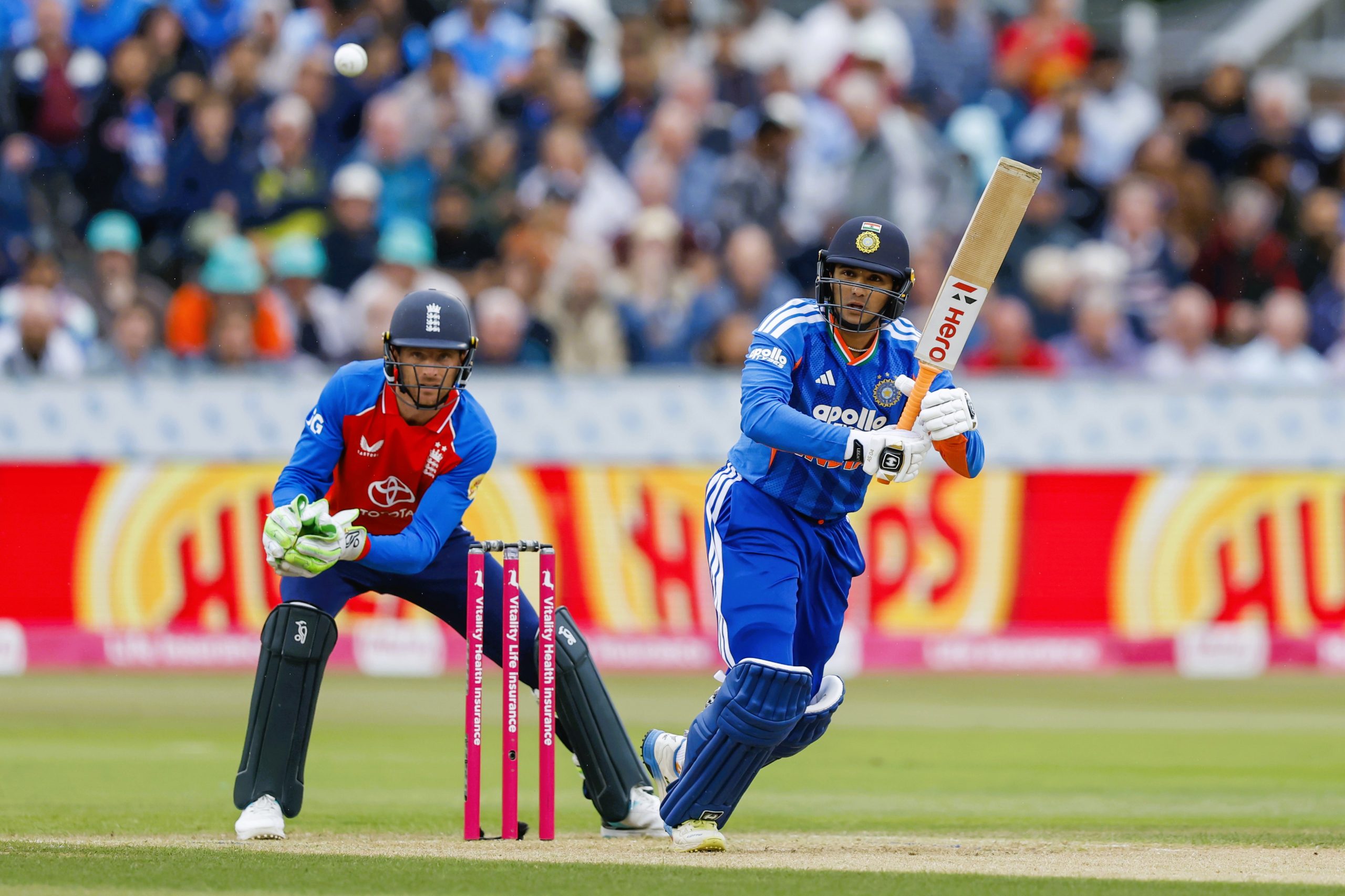
Shapes can also confound pros, by the way. England boundary riders found themselves in a tizzy at the Riverside Ground in Chester-le-Street, given the asymmetrical dimensions of the venue. Since the playing field is a hexagon rather than a circle, the distance from the centre of the pitch to the rope varies considerably. The difference between the shortest and farthest lengths is around 15 metres, enough to leave Harry Brook and Jacob Bethell in a dilemma about their positioning on the fence. To no avail, each put a despairing dive at mid-wicket to stop a pull shot from Shreyas Iyer and Tilak Varma respectively. Their headstarts in the deep were to blame, a function of the sprinting urgency shown during the captain’s 82-run partnership with Abhishek Sharma.

It was a significant departure from the script that India’s tour of the United Kingdom had hitherto followed. With Ireland dominating the early exchanges, their middle order was put to test twice but couldn’t exactly pass it with flying colors. Assistant coach Ryan ten Doeschate pointed out, in the final analysis of the shock drubbing, that India weren’t quick on the uptake in foreign conditions. “We’re probably too used to a sort of a tempo and style where you can hit sixes more freely. I think this will be the case when you go to England as well, you know, maybe slightly quicker wickets, maybe slightly less wind, but we’re going to have to adapt and be a lot smarter about how we’d like to play if we’re going to get wins there.’’
“I don’t think there was one ball pitched up from their seamers and spinners. They never let us hit straight.’’ Doeschate added, referring to a productive scoring zone that Ireland strived to block. When Sanju Samson sliced an on-the-up drive to Tom Banton, the alarm bells rang again in the visiting camp, and Ishan Kishan’s second consecutive run-out wasn’t the act of assurance they were expecting will ensue. The series opener marked England’s return to the format after their seven-run semifinal defeat to India at the T20 World Cup, but this was a team riding high on confidence nonetheless, having won nine of their 11 T20Is in 2026.
In their den, they had in front of them an under-pressure Indian spine. Iyer was on the comeback trail, away since December 2023. Abhishek was coming off a golden duck. Tilak batted so poorly in the marquee event earlier this year, especially against spin, that Rajat Patidar appeared to be threatening his secure spot for this assignment.
Much to India’s delight, the acclimatisation process was now complete, better belatedly than never. In the PowerPlay, India garnered runs square of the wicket versus pace and targeted the spinners, the easier lot to contend with on seaming tracks. The breezy extension of the arms was a defining attribute of Abhishek’s march, as an inside-out loft hit the cushions on the full against Liam Dawson while Saqib Mahmood’s back-of-length operation met his sexy horizontal blade. So lethal was the combination of his bat speed and the power generated from torso rotation that even a miscue, which tempted long leg for an ephemeral moment, fetched him half-a-dozen. As Mahmood pitched it up to course correct, Iyer fancied a steer, maneuvering the face to beat Banton whose agility had denied Samson a release valve.

The impetus gained from the 21-run over spilled into the salvo of Luke Wood, with acrobatics from Phil Salt needed ultimately to avert a quadruple of boundaries. As the left-right pair shared fifty, the unique figure of the stadium rendered containment a challenge for the hosts. Abhishek and Iyer stole a brace owing to the time throws took to arrive from the bigger pockets, forging a quickfire alliance that served as a validatory tick to Doeschate’s counsel with regard to catering to the unique demands of the contest.
Even though Sam Curran complemented Mahmood’s fine second spell to slow India down, Shivam Dubey’s cameo bore testimony to their remodeled approach. He rolled his wrists nicely to control a help-along pull before giving Adil Rashid the charge to flex his muscles. On that note, ever since the men in blue have landed on English shores, there has been a lot of kerfuffle around the absence of a broad-shouldered prodigy. As per the general consensus among the fans, the non-inclusion of Vaibhav Sooryavanshi in the initial three games of this white-ball trip is unbelievable, similar to the promotion of Harshit Rana over Axar Patel at the death.
In the innings break, as the wunderkind walked past the gallery adjacent to the digital scoreboard for a stint in the nets, the rumbling of hungry stomachs was collectively ignored. A neon-bibbed security officer, a colleague of whom had asked Vaibhav for an autograph on a jersey before the coin fell in India’s favour, protected the young kid from any unwarranted displays of fervour. Granted the crowds in England are nowhere near as notorious as their subcontinental counterparts, watching India’s future in flesh and blood can nudge people into acting upon intrusive thoughts.


