

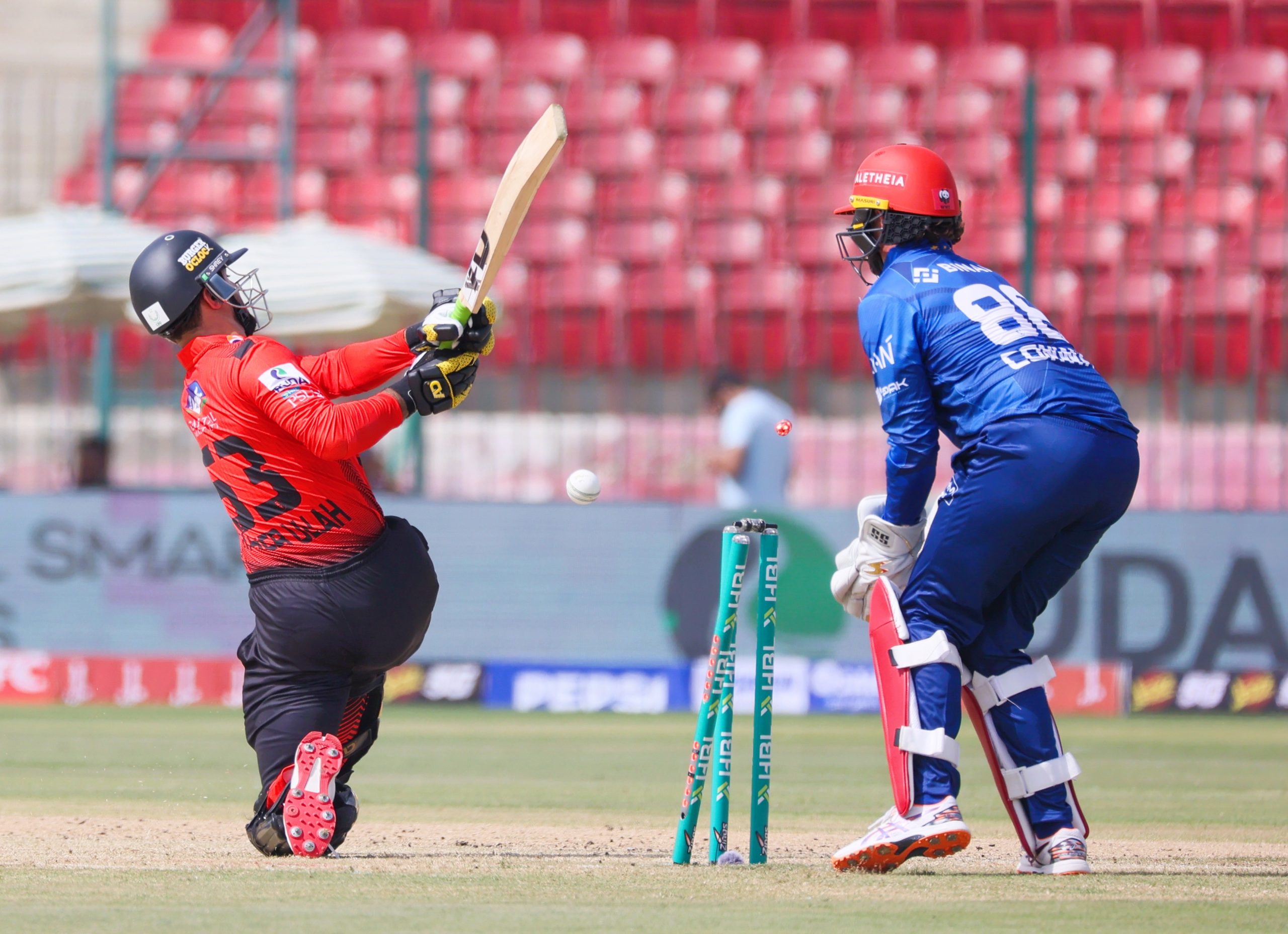
Picture this. Mumbai Indians posted 243/5 in a routine IPL league game. The commentary team calls it ‘a competitive total’. As it turns out, Sunrisers Hyderabad chased it down by eight balls to spare. It is, by IPL standards, a normal Wednesday evening.
That same week, the PSL 2026 final was decided by five wickets, with Peshawar Zalmi chasing down just 129. The two eliminators averaged around 170 per innings. Same format, same twenty overs, same white ball; completely different game.
This is not a one-off. This is a story of growing divergence – in how batters build an innings, in how pitches dictate a game – between two leagues that once ran on the same fuel. Somewhere along the way, IPL batters stopped playing the same game.
Just when PSL had started to match the standards, IPL exploded. Run rates, powerplay scores, and six-hitting surged to unprecedented highs in 2024, with teams playing a brand of cricket the format had never quite seen. The 2024 season did not just push the boundaries of T20s; it redrew them entirely.
In 2024, IPL had a run rate of 9.56 and 26 first-innings scores of 200-plus, both the highest in the league at that point. 8.88 sixes were hit per innings, again the highest in the league back then. Sunrisers Hyderabad alone broke the all-time IPL scoring record three times that season, with scores of 287/3 against RCB, 277/3 against Mumbai Indians, and 266/7 against Delhi Capitals.
If 2024 felt like a rupture, 2025 made clear it was just the beginning. The run rate remained at a similar 9.62, with 8.94 sixes being hit per innings. Teams crossed 200 in the first innings 33 times, almost every second game. The spectacle was beginning to feel monotonous at this stage. Another 200, another record, another evening where bowlers had no answers. Sunil Gavaskar, never one to stay quiet, put his concerns in writing.
“While the batters’ approach in the powerplay has changed drastically, what hasn’t changed is the size of the boundaries. This despite there being more space beyond the LED advertising boards which can be pushed almost to the fence. So often we see sixers just clearing the boundary line, which could well result in a dismissal if the LED boards were pushed back,” the legend urged. Nobody listened.
In 2026, the run rate climbed to a peak of 9.88, with 9.71 sixes per innings. Teams crossed 200 in the first innings 38 times, surpassing the previous record of 33, which didn’t
even last a season.

Setting 200 used to be the hard part. Chasing it was a different proposition altogether. Between 2008 and 2023, teams chasing 200-plus won only 23 times in IPL, roughly once every five games. When Rajasthan Royals needed 51 off the last three overs chasing 224 at Sharjah in 2020, the target seemed to have broken them, as often happened in such big chases back then. Then Rahul Tewatia hit five sixes in a single over off Sheldon Cottrell. Rajasthan won by four wickets – the highest successful chase in IPL history, one that seemed barely repeatable.
That was 2020. Since 2024, teams have chased 200-plus successfully 31 times, once every 3.16 games. 200 is no longer a safe score. In 2026 alone, even 220-plus targets have been chased down nine times. Punjab Kings were given a 14.83% chance of winning by ESPNcricinfo after KL Rahul’s unbeaten 152 off 67 balls propelled Delhi Capitals to 264/2. But by the time Shreyas Iyer guided his team home with seven balls to spare, the result had long stopped being in doubt.
While IPL was rewriting the record books, PSL’s run rates over the last three seasons have been 8.73, 9.12, and 9.09, respectively. On their own, these are not bad numbers. Against the backdrop of what IPL became, they tell a story of a league left behind. In 2026, a 200-plus score came once every 4.25 games, down from the remarkable frequency seen in 2025. Sixteen of 26 full 20-over innings produced 200-plus totals that season, compared to once every five games in 2024. The regression in 2026 suggests that PSL’s surge in big scores was a spike rather than a sustained shift in its scoring environment.
Since 2024, teams chasing 200-plus in PSL have won once every four attempts. The conditions are the same for both sides, which means PSL batters have shown they can handle a big chase when the target is there. They just never found a way to post 200-plus totals consistently in the first place.
Why has IPL gone ahead?
Several reasons explain why IPL has become such a high-scoring tournament while PSL has struggled to keep pace. For starters, India have a deeper and more developed local player pool than Pakistan, producing world-class T20 batters at a rate like no other. A 15-year-old Vaibhav Sooryavanshi walking into most T20I sides is not an accident of talent – it is the product of a system.
IPL franchises run camps throughout the year, where uncapped players continue honing their skills even in the off-season. Beyond that, almost every major Indian state runs its own T20 league, keeping the talent pipeline constantly flowing. The likes of Prince Yadav, Vipraj Nigam, and Brijesh Sharma have been fast-tracked into the IPL with minimal domestic experience.
The scouts attend tournaments at every level, tracking players long before they are ready. Unknown talents work as net players during the IPL season itself, facing the best in the world before they have played a single professional game. By the time they make their debut, the rough edges have already been smoothed out – thanks to precise technical work with franchise academies ensuring they hardly arrive as raw talent.
With every game, we got a bit more confident of conferring on him the label of child prodigy, but the thought of his age just kept tugging at us. We were all playing the role of aux-parents, trying to wrap him in cotton wool, and he’d break out every time https://t.co/s8lz8rQaEw pic.twitter.com/zNLws8C5up
— White Glove (@readwhiteglove) June 6, 2026
Pakistan, meanwhile, has a gap not just in its talent pipeline but in the programmes built around it. There is no consistent, structured pathway for young players to continually refine their skills and iron out the gaps in their games. Former Pakistan batting coach Hanif Malik summed it up well in an interview with Cricinfo after the T20 World Cup 2026 debacle.
“Teams around the world take off seasons where their players take a break from cricket to analyse himself or herself and work on their weaknesses. That does not happen here. We are mostly hopping from one event to another. We do not have time for preparation. The execution of a player’s preparation here happens only at the international level, where he is already under pressure to perform, which makes him go into his shell.”
However, amidst all this, the biggest reason for unrealistically high scoring rates has been a complete change in tracks across Indian venues. In T20 cricket, no other venue provides surfaces as flat as those in India. The change has come collectively, not limited to just IPL.
The run rates and average first-innings scores paint the right picture. Since 2024, matches in India have collectively produced a run rate of 9.08, with batters scoring at a strike rate of 143.65, both comfortably the highest among all countries with at least 50 T20s. On average, teams have hit 7.94 sixes per innings and scored 161.55 runs per innings, again the highest among all qualifying nations.
T20 internationals on Indian pitches tell the same story. Since 2024, T20Is in India have produced the highest batting average of 26.30 and run rate of 9.22 among all countries with at least 20 T20 internationals – numbers that reflect how pitches have gone flat beyond just the franchise circuit.

New Zealand, despite having some of the shortest boundaries across its venues, remains a distant second. IPL’s batting explosion has primarily been attributed to the Impact Player rule, introduced in 2023. The logic is straightforward – an extra batter in the lineup means more hitting, more boundaries, more runs. And to an extent, that is true.
However, comparing three major T20 tournaments in India – T20Is, IPL, and the Syed Mushtaq Ali Trophy – in the recent three seasons with the previous three years shows that it might not be the primary contributor. Between 2021-23 and 2024-26, T20Is saw a run rate surge of 0.34, with sixes per innings rising from 7.51 to 8.71. The bowling quality had not dipped; the pitches had simply changed beneath their feet.
The transformation was not limited to bilateral cricket either, where teams do try to experiment and go harder at times. The T20 World Cup, the format’s biggest prize, in early 2026 was jointly hosted by India and Sri Lanka – same trophy, but completely different game depending on which side of the Palk Strait teams were playing on. Runs flowed at 9.02 an over in India; in Sri Lanka, they languished at 8.21.
High-pressure knockouts, it turned out, were no different. The semifinal against England at the Wankhede produced 499 runs, the second-highest match aggregate in T20Is, and 34 sixes, the most in a T20 World Cup game. India’s 253 was answered by Bethell’s 105 off 48 balls as England fell just seven runs short.
Even the final against New Zealand saw India post 255. No Impact Player rule. No shortage of quality bowling to blame. Just flat pitches doing what flat pitches do. Meanwhile, IPL’s run rate climbed from 8.70 to 9.68 between the two periods, with sixes per innings rising from 7.27 to 9.08. Even the Syed Mushtaq Ali Trophy – a domestic competition, no Impact Player, no overseas stars – told the same story. Run rates surged from 7.57 to 8.58, sixes per innings from 4.83 to 6.82.
The Impact Player rule, introduced on an experimental basis in the competition, was scrapped from the 2024-25 season onwards as the BCCI grew concerned that it was stunting the development of all-rounders. The scoring explosion happened anyway. Four of the five highest totals in SMAT history have come in the last two editions alone, including Baroda’s 349/5 – the highest of them all.
The tracks have been redesigned to produce more runs, and the change has been visible across grounds. IPL venues like Lucknow and Jaipur, which previously offered something to bowlers and were usually slowish, have also followed suit, becoming consistently batting-friendly with even bounce. The Impact Player rule contributed, but it did not cause the surge in IPL.
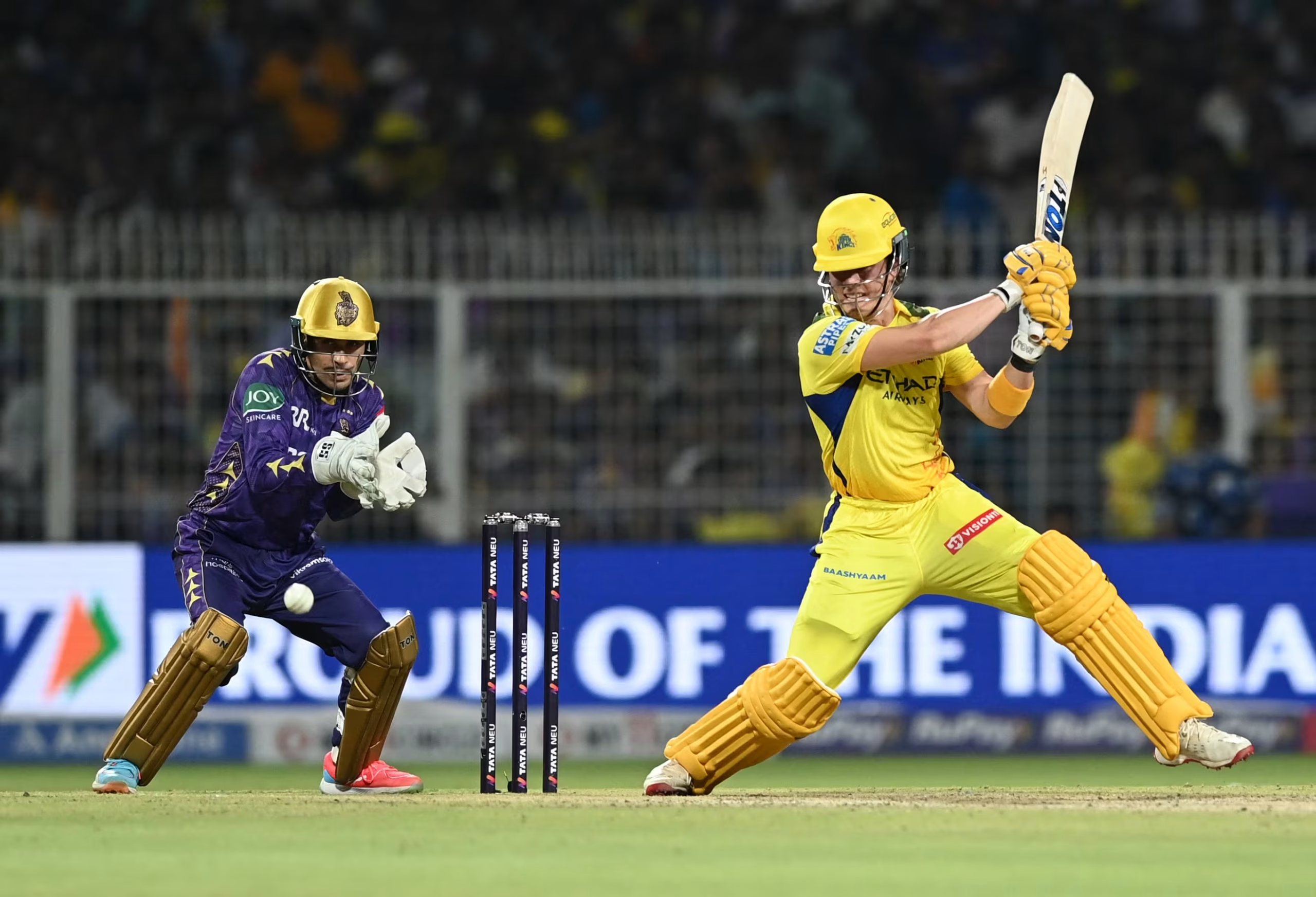
The pitches were already flattening, the batters were already getting better. The rule simply arrived at the right time and accelerated what was already inevitable. It’s not that Pakistani pitches didn’t flatten; they just did not move as far or as fast as Indian pitches.
T20Is in Pakistan since 2024 have a run rate of 8.11, compared to India’s 9.22 in the same period. This is despite the Men in Green playing against teams like South Africa and Australia, who arrived near full strength with a T20 World Cup on the horizon. The run rate has been north of 8.50 only once in five rubbers, while the figure is breached all six times on the other side of the border.
Pakistan’s local T20 competitions tell a similar story. Since 2024, the run rate across the National T20 Cup and Champions T20 Cup has averaged 8.17, nearly half a run fewer than SMAT. The difference between the two countries remains at every level. Teams have revamped their innings-building structure in the IPL. The early middle overs, right after the powerplay, are no longer a phase of consolidation, and spinners are no longer the containing force they once were. Two crucial checks that kept the balance intact have been completely blown away.
In IPL, the run rate in overs 7 to 10 has jumped from 7.69 between 2021 and 2023 to 8.55 since 2024. The dot ball percentage in that phase has dropped from 33.78% to 30.06%. In PSL, the shift has been far more modest – run rate moving from 7.64 to 7.93, dot balls from 32.79% to 31.60%. Over 7 to 10 used to be the quiet phase of a T20 innings, irrespective of how the powerplay unfolded. As a set template, batters would take stock, rotate strike, respect the good ball, and build a platform for the carnage to come in the second half of the innings. The numbers from both leagues before 2024 reflect exactly that.
What has changed in IPL is the mindset. Batters no longer take stock after the powerplay – they keep playing through the line, backing themselves to clear the fielder, refusing to treat a good-length delivery as something to be respected. The reset button, once pressed automatically at the fall of a wicket or the end of the powerplay, has been disconnected.
When the surface offers nothing, settling for 150 is no longer playing it safe and giving something for the bowlers – it is handing the opposition a head start even before the second innings has started. Teams now bat to a ceiling, accepting the possibility of folding for 120 in pursuit of 200. The risk is built into the plan in both innings, and most of them know just one way to bat these days.

Sunrisers Hyderabad are the most extreme example of this philosophy. Gujarat Titans boasted one of the most feared bowling attacks in the competition, with Kagiso Rabada, Mohammed Siraj, and Rashid Khan leading the charge. Chasing a modest 169 on a tricky Ahmedabad pitch in 2026, SRH did not recalibrate despite losing four wickets in the powerplay.
They went hard from ball one, as they always do. Only to be bowled out for 86 in 14.5 overs. The approach did not change. It never does. Contrast that with PSL, in the same year. When Rawalpindiz chased 138 against Islamabad United in April 2026, they got home with six wickets in hand, but it still took them 18.1 overs. The old template of rotating and building still runs deep there. SRH, meanwhile, barely flinched after being bowled out for 86.
The change in the middle overs approach has had a direct consequence for spin bowling. Spinners, once the go-to option with a spread field, have found themselves increasingly under fire. On surfaces that offer no grip, no turn, no help, they are simply another option to hit.
In IPL, spinners bowled 37.49% of total overs between 2021 and 2023. Since 2024, that figure has dropped to 33.97%, with their economy rate surging from 7.81 to 8.93. Off-spinners have borne the brunt; with minimal turn and grip on offer, they have lost their primary weapon and are no longer the matchup options.
The numbers tell one story. A match between Punjab Kings and Delhi Capitals in Dharamsala put those numbers into perspective. For the first time since 2008, an entire IPL game was completed without a single over of spin. It was not just a tactical call. It was a sign of how much Indian surfaces have changed. Spinners still exist in IPL, but the slow, loopy variety has all but disappeared – pace off the pitch no longer works when there is nothing in it to grip.
“The wickets have been very flat, very compact and very high-scoring [in the IPL]. And when you’ve got small boundaries, you’re going to see very high scores. Back in the day, there used to be turn, and you couldn’t get those scores,” Warner told AFP in 2024, after seeing the scoring rates surge.

In PSL, the trend has gone the other way. Spinner usage has climbed from 31.15% to 39.35% since 2024, with economy rates nudging from 7.99 to 8.18. They still do the traditional work of restricting run scoring in the powerplay and middle overs there.
The Impact Player rule has made matters worse across the board. Teams now frequently bring in a specialist pace hitter in the lower order; someone whose sole job is to target the seamers. Spinners have lost their grip on the game, and pace is no longer a refuge, as there is always a specialist waiting at seven or eight to make it count.
Since 2024, IPL’s numbers 6 to 8 have averaged 23.06 at a strike rate of 149.57, hitting a boundary every 5.05 balls. In PSL, the same positions average 18.93 at a strike rate of 142.80, with a boundary every 5.28 balls. The lower order in IPL is no longer a tail; it is an extension of the batting lineup, engineered by the Impact Player rule.
What would have been a 190 can now become 200 simply because there are more specialists in the lower order to squeeze out those extra runs in the final overs. Ten runs that once belonged to the tail now often belong to specialist batters. That’s another reason teams chase down those big targets.
During the KKR vs LSG IPL 2026 contest, LSG had lost six wickets for 125 in a 182-run chase in Kolkata. However, Mukul Choudhary, walking in at No.7, single-handedly kept his team in the game before eventually taking them over the line from an impossible situation. That was only possible since LSG could afford a specialist pace-hitter in the lower order instead of an all-rounder.
Several pace-hitters like Ashutosh Sharma, Naman Dhir, and Shashank Singh have aced the toughest role for batters in T20 cricket due to more exposure enabled by the Impact Player rule. Earlier, they hardly had a chance to start regularly in place of multi-dimensional players. That’s where a strong domestic structure has played a role in expanding the local talent pool. The gap between India and Pakistan on that front is not marginal. It is structural, and it eventually shows in the scoring rate compared to the IPL.

Take the National T20 Cup 2026, for instance. Trimmed from 18 teams to 10 this year, it was played entirely at a single venue. Batters faced the same surface, the same dimensions, the same conditions from the first game to the last.
Repeat exposure dulls a batter’s ability to evolve and adjust to varied conditions, even if tracks remain batting-friendly. A player groomed on one surface arrives at PSL, with its varying conditions across Karachi, Lahore, Multan, and Rawalpindi, already a step behind. The competition that is supposed to feed PSL has been shrinking, not growing. SMAT, by comparison, features 38 teams and is played across the length and breadth of the country on 14 different venues.
Pakistan’s domestic T20 structure has been overhauled multiple times in the last decade; stability remaining elusive. What happens at the domestic level eventually shows up in franchise cricket and at the international level. Teams no longer feel compelled to fill all four overseas slots. Gujarat Titans played only five overseas players throughout the entire competition this year. The reliance on foreign talent has been diminishing, and a strong domestic structure, combined with the Impact Player rule, has a significant role in making that possible.
PSL remains a strong T20 competition. The problem is that IPL is no longer operating on the same scale. Its pitches, player development system, and batting culture have pushed scoring into territory no other league consistently reaches. The gap is no longer about quality alone; it is about the environment that produces it. And right now, that environment exists more than anywhere else in India.


